
Concrete Patios • Raleigh, NC
Concrete & Stamped Patios in Raleigh, Durham, Chapel Hill & Across the Triangle
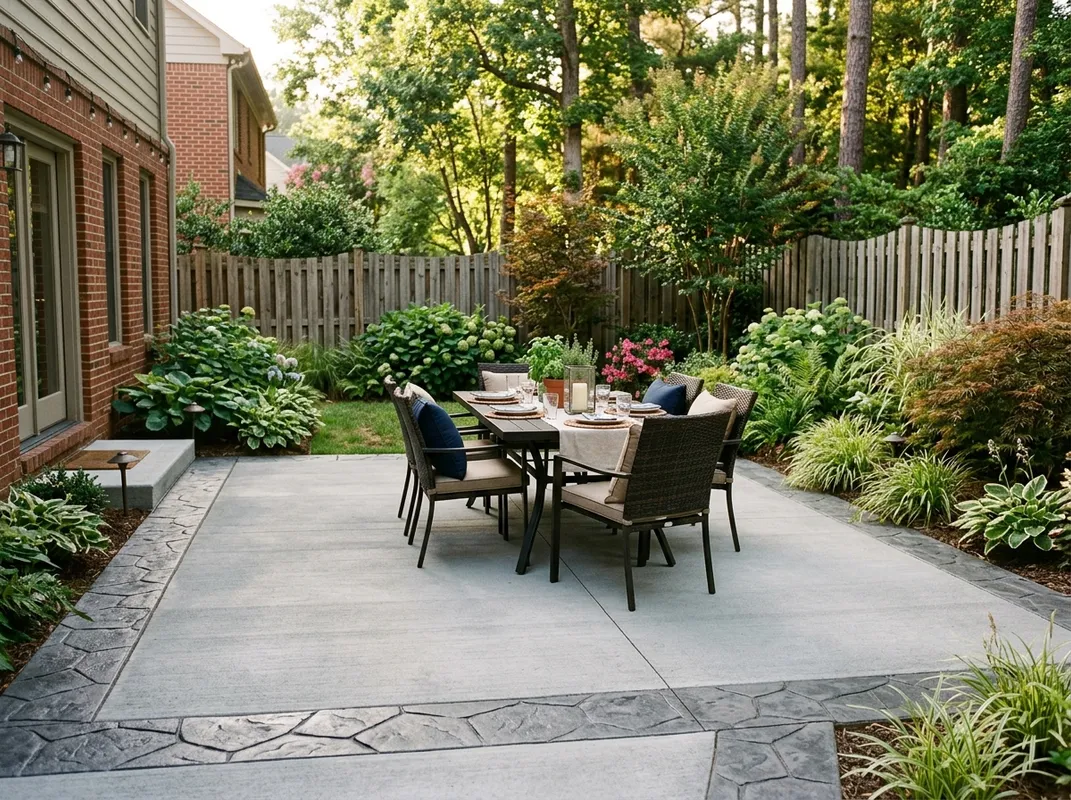
A muddy backyard or a too-small builder slab keeps you indoors half the year. A poured concrete patio fixes that with a reinforced 4-inch slab graded away from your foundation, so water runs off instead of pooling against the house. ALB builds patios plain or stamped, with project-manager oversight guiding the pour.
Concrete Patios Designed for Carolina Living
Precision grading, compacted bases, and strategic control joints ensure your patio drains cleanly and handles clay movement.
The thing that ruins a backyard patio isn't the concrete, it's water. Pour a flat slab against the house with no fall and Triangle rain pools at the foundation and sits in the slow-draining red clay. A patio has to be graded to shed water before it's anything else.
We grade and compact the subgrade, lay an aggregate base, then pour a reinforced 4-inch slab pitched away from the foundation so it drains. We add fiber or rebar, saw-cut control joints to manage cracking, and finish it plain with a broom texture or stamped to look like stone. You can build it as a single level or step it down across a sloped yard.
- Reinforced 4-inch slab built for furniture, foot traffic, and gatherings
- Graded away from the foundation so water drains instead of pooling
- Control joints and reinforcement to manage clay movement
- Plain broom finish or stamped, single-level or multi-level
Types of Concrete Patios We Handle
From the finish to the layout, the patio is built around your yard and how you want to use it.
Finishes
- Plain broom finish for a clean, slip-resistant surface
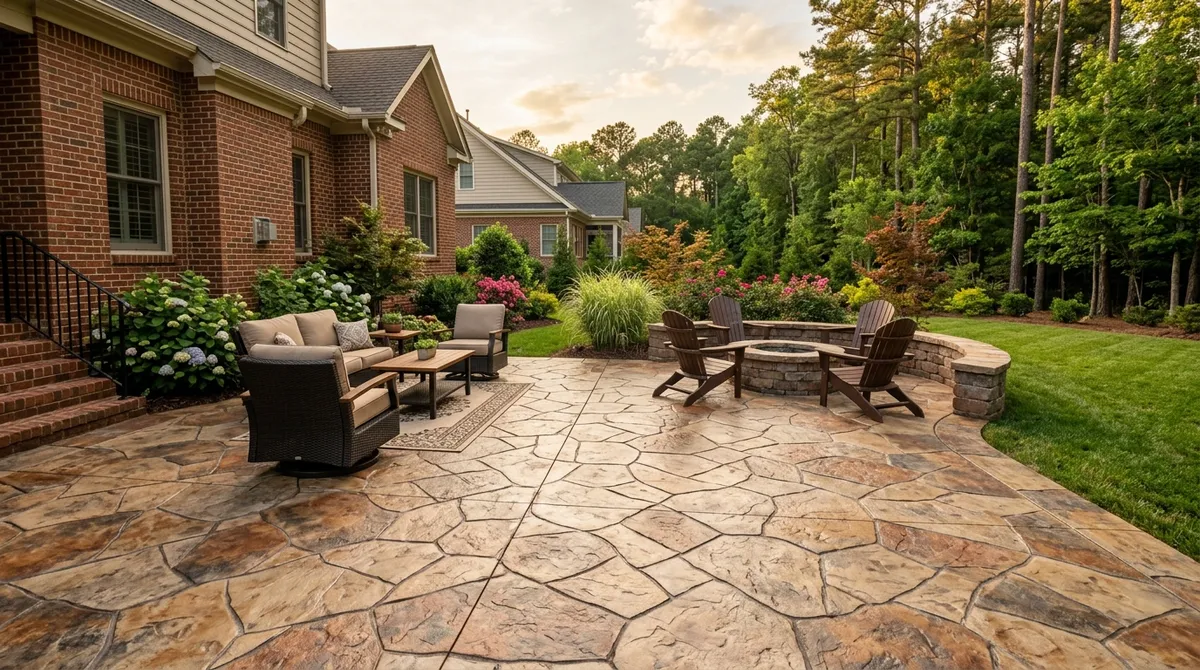
- Stamped to mimic flagstone, slate, or brick
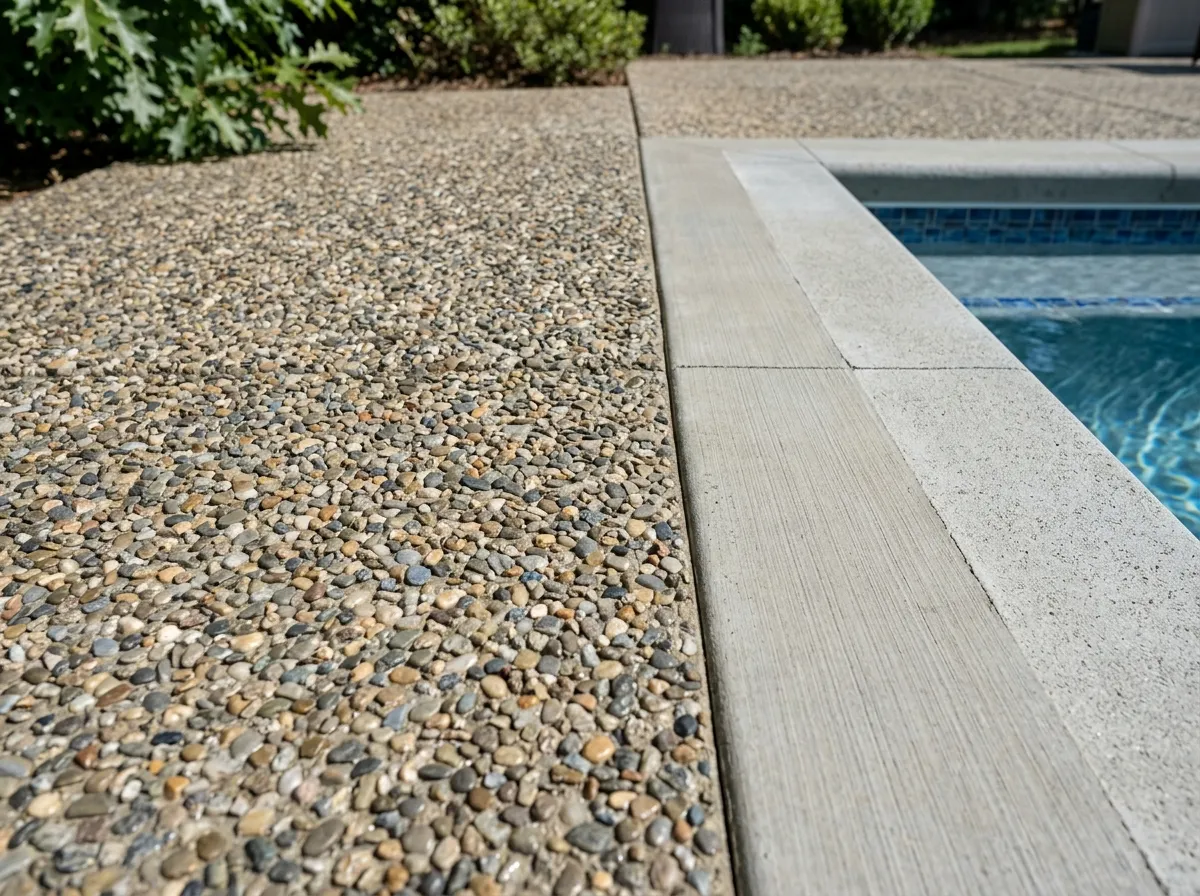
- Exposed aggregate for a stone-speckled texture
- Integral or surface color
Layouts & Features
- Single-level patios
- Multi-level and stepped patios for sloped yards
- Integrated fire-pit pads
- Built-in seat walls
Not Sure Which Option?
The ALB team walks the yard with you, looks at the slope and where the sun and shade fall, and brings input on size, level changes, and finish, with no pressure. You get an honest take on what fits the space and the budget.
Concrete Patio Applications
Where a poured patio earns its place around the house.
Backyard Patios
The classic open patio for furniture, dining, and gatherings. Sized to your yard, graded to drain, and finished plain or stamped to match the house.
Pool Decks
A reinforced, sloped surface around the pool with a slip-resistant finish. Stamped or broom-finished, sealed against pool chemicals and weather. Popular options: anti-slip finish, stamped texture, lighter colors.
Outdoor Kitchen & Grill Pads
A solid, level pad to carry the weight of a grill, smoker, or full outdoor kitchen without sinking into the clay. Often tied into the main patio.
Fire-Pit Areas
A dedicated pad or a recessed area within the patio for a fire pit, often paired with a seat wall to wrap the space.
Covered Porch Floors
A finished slab for screened or covered porches, poured level and graded so any blown-in rain drains off.
Walk-Out Basement Patios
A patio off a walk-out basement door, graded carefully away from the foundation since it sits right at the house and below grade on one side.
Concrete Patio vs Pavers vs Wood Deck
A wood deck needs staining and board replacement and rots in Triangle humidity. Pavers heave at the joints on shifting clay. A poured concrete patio sits flat, drains where you grade it, and asks for little more than an occasional seal. It's the lowest-fuss of the three for a ground-level outdoor space.
Concrete Patio Maintenance
A concrete patio is about as low-maintenance as outdoor living gets. No annual staining like a deck, no joints to re-sand like pavers. A little routine care keeps it looking new for decades.
Routine Cleaning
Sweep off leaves and debris and rinse or lightly pressure-wash a few times a year. Clearing organic matter keeps stains and mildew from setting into the surface in our humid climate.
Sealing Decorative Surfaces
If your patio is stamped or colored, reseal it every couple of years to protect the color and texture from UV and rain. A plain broom-finished patio benefits from an occasional seal but needs it less often.
Joint Care
Keep the control joints clean and re-caulk them as needed so water doesn't work underneath the slab. This matters more here because saturated clay is what undermines patios over time.
Why ALB Concrete Solutions for Concrete Patios
A patio sits right against your house, so getting the grade and drainage wrong doesn't just crack the slab, it sends water toward your foundation. This is a job where the prep and the slope matter as much as the finish.
Professional Team Oversight
Your project manager measures the yard, plans the grade and level changes, and coordinates the pour so drainage details stay aligned with the plan.
Coordinated ALB Team
The coordinated ALB team handles grading, base prep, and the pour, so the drainage plan doesn't get lost between a planning and finishing. One team owns the result.
Higher-Grade Mixes
We use a higher-grade concrete with proper admixtures, reinforcement, and cure planning so the slab is built to resist cracking through Triangle freeze-thaw.
Serving the Whole Triangle
From Raleigh through Wake, Durham, Orange, Chatham, and Johnston counties, we build patios suited to local yards, slopes, and the red clay underneath them.
Plan Your Concrete Patio
Tell us a few details about your backyard and the ALB team will follow up to schedule a free on-site estimate, usually the next day. No pressure, no hard close.
Concrete Patio
FAQs
It varies with size, finish, and site prep, but stamped and decorative patio projects average around 9,000 to 10,000 dollars. A plain broom-finished patio costs less; a large multi-level stamped patio with a seat wall costs more. Your project manager gives you an itemized estimate so you see exactly what drives the number.
A plain broom finish is the most economical and very durable. Stamped costs more but gives you a flagstone or slate look as one solid, low-upkeep surface. Many homeowners do a plain field with a stamped border to balance cost and looks. The ALB team shows you both with sample boards on site.
Effectively as big as your yard and budget allow. We plan joint spacing and reinforcement so larger slabs still move without random cracking, and we can step a big patio across a sloped yard into multiple levels.
Usually not for a ground-level patio in the Triangle, but impervious-surface limits and right-of-way or setback rules can apply depending on your lot and town. We check the local requirements before we pour so you're covered.
Most patios take a few days of work plus cure time. You can typically walk on it within a day or two, but wait about a week before putting heavy furniture or foot-heavy gatherings on it so the concrete cures hard. Your project manager gives you the exact timeline.
We control cracking with saw-cut control joints, reinforcement, a compacted base, and proper cure planning. Hairline movement at the joints is normal and planned. The random cracking people fear comes from a bad base or rushed placement, which we avoid.
Related Concrete Services
The coordinated ALB team handles the work that ties your patio into the rest of the yard.
Stamped Concrete
Flagstone, slate, and brick patterns pressed into a solid slab — the decorative finish that pairs naturally with a patio.
Learn moreWalkways & Sidewalks
Level, slip-resistant paths that tie the patio back to the driveway, the side gate, and the front door.
Learn moreConcrete Flatwork
Porch slabs, pads, and other flat pours done with the same base prep and reinforcement as your patio.
Learn moreBuilding Patios Across the Triangle
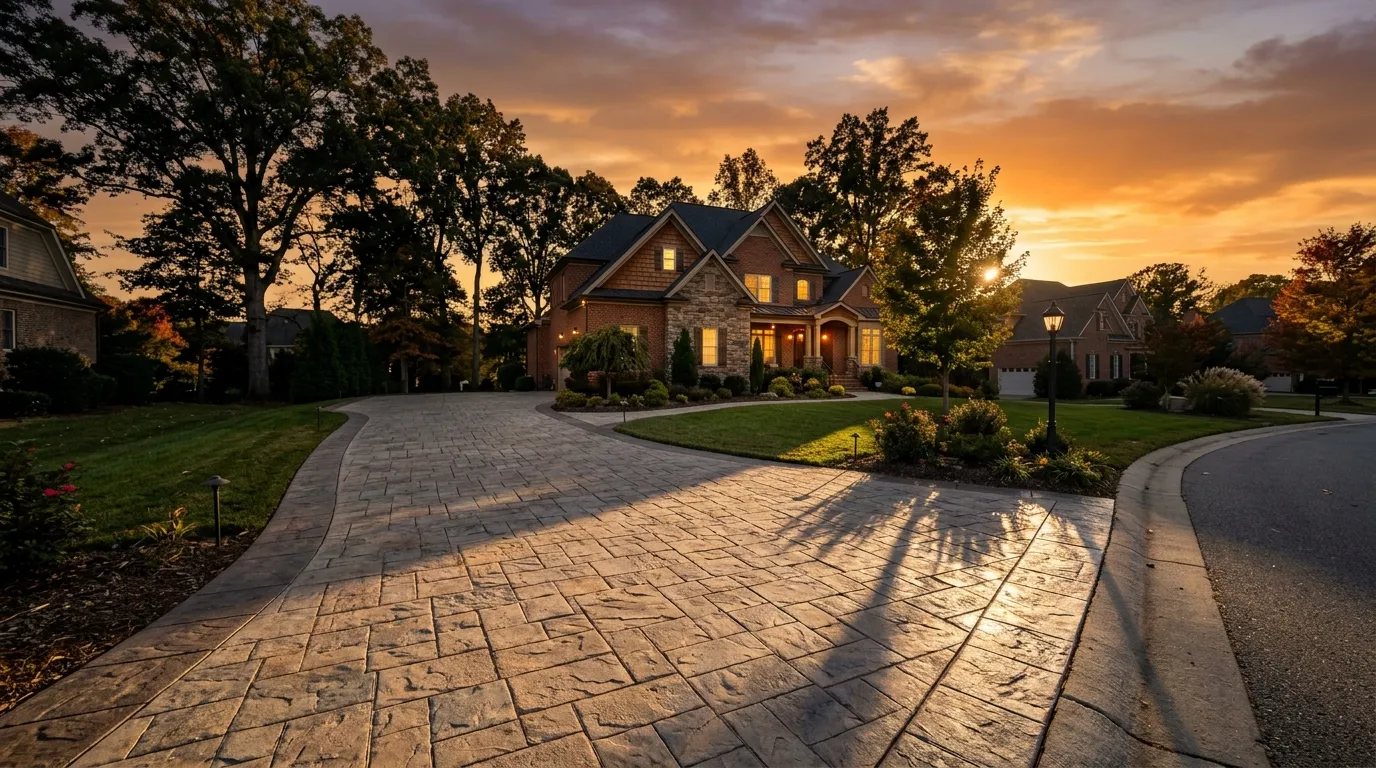
ALB Concrete Solutions pours concrete patios for homeowners throughout Greater Raleigh and the surrounding Triangle communities.
Turn the Backyard Into a
Place You Actually Use
A new patio starts with a free on-site estimate where the ALB team walks the yard, talks through grade, finish, and level changes, and sends an itemized written proposal within about two business days.