
Decorative Concrete • Raleigh-Based
Stamped & Decorative Concrete in Raleigh, Durham, Chapel Hill & Across the Triangle
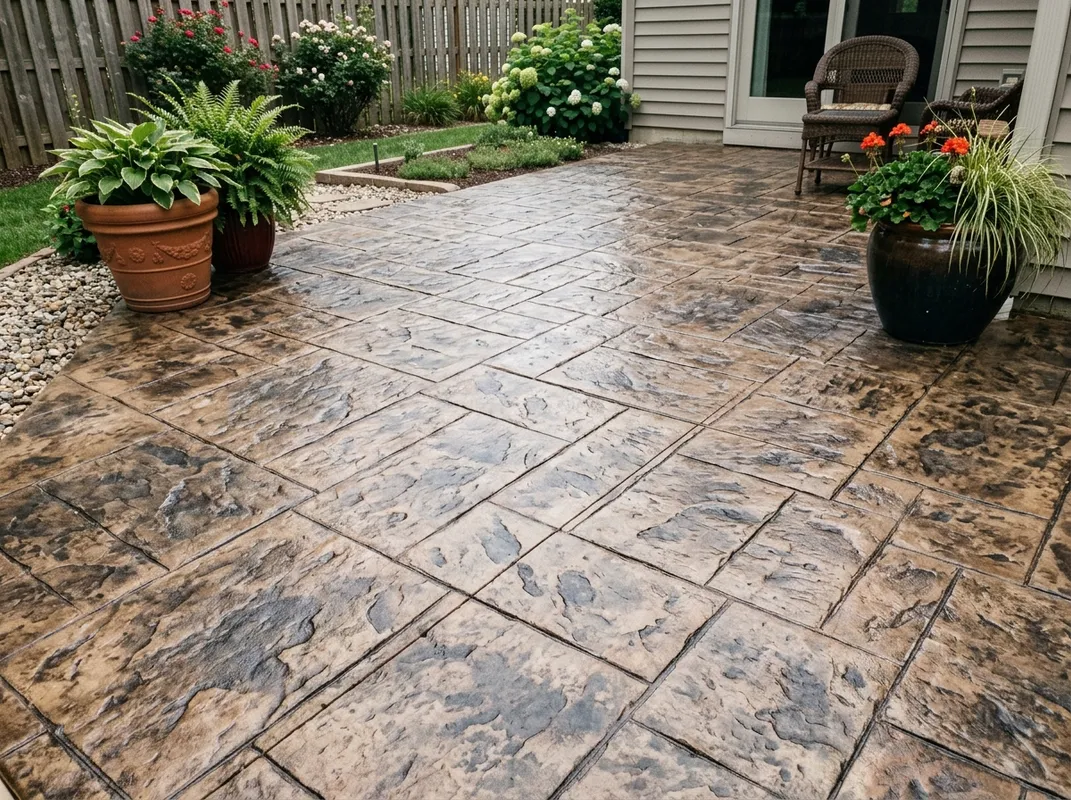
You want the flagstone or paver look without the paver price or the weeds growing up between the joints. Stamped concrete gets you there: real stone molds pressed into a fresh, colored pour, then sealed into one solid surface. ALB offers 20-plus patterns, and the ALB team brings real sample boards to your site so you choose from the actual color, not a screen.
Get the Look of Natural Stone for Raleigh Patios
Real-material molds give you authentic stone texture in a single solid slab—no loose pavers, weeds, or shifting joints.
Stamped concrete is a poured slab textured to look like stone, slate, brick, or wood plank. While the concrete is still fresh, we press flexible molds cast from real materials into the surface, so it reads like flagstone but behaves like one continuous slab with no joints for weeds, ants, or shifting pavers. On Triangle red clay, that single bonded surface is a real advantage over individual pavers that heave as the ground moves.
The work starts the same as any quality slab: a compacted aggregate base over graded subgrade, a reinforced 4-inch pour with fiber or rebar, and saw-cut control joints. Then the decorative layers go on while the concrete is workable, integral color in the mix, color hardener and antique release on the surface, the stamp pressed in, and a protective sealer to finish.
- One solid surface, no joints for weeds or ants and no individual pavers to shift
- Far lower upkeep than natural stone or pavers
- Dozens of patterns and color combinations to match your home
- Costs less than natural stone for a similar high-end look
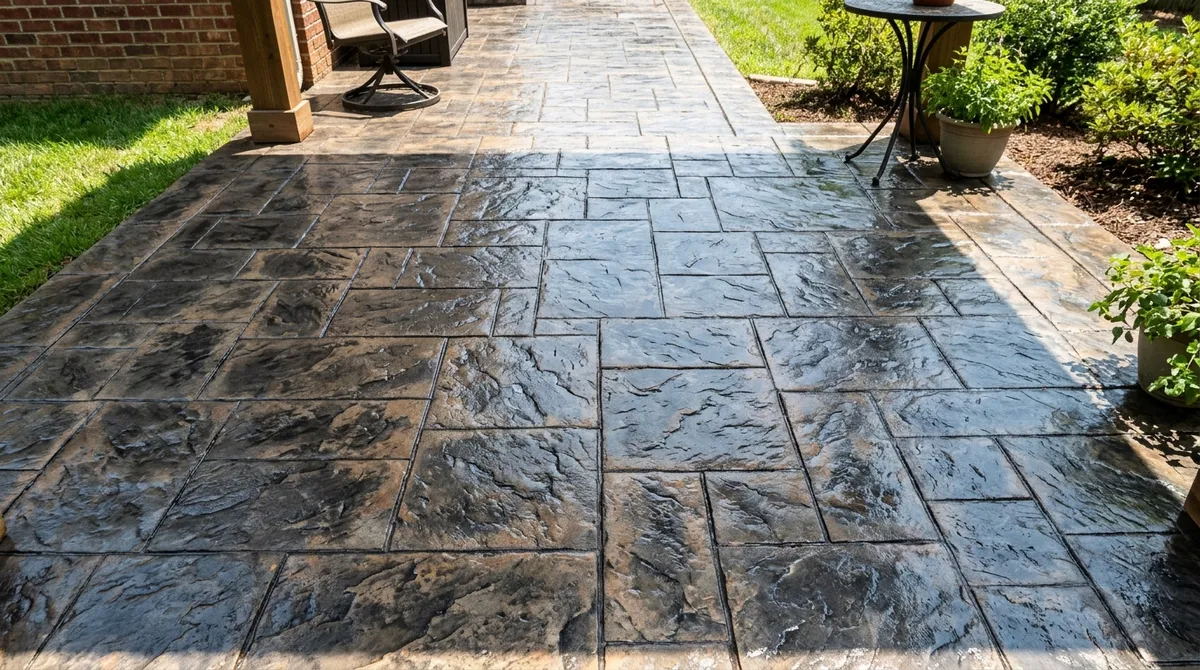
20+ Patterns
Real sample boards on site
Stamped Concrete Patterns We Handle
Real stone molds, brick, and wood-plank textures pressed into the pour — pick the look that fits your home.
Stone & Slate Patterns
- Ashlar slate
- Random stone and Roman slate
- Cobblestone
Brick & Plank Patterns
- Running-bond and herringbone brick
- Wood plank for a board-look patio or porch
Texture & Accents
- Seamless texture for a soft, low-pattern surface
- Stamped border accents around plain or broom-finish fields
Not Sure Which Option?
The ALB team walks the project with you and brings real sample boards so you see the actual pattern and color in your own light, next to your brick and siding. No pressure, just a straight read on what will look right.
Book a Free ConsultationHow We Build Stamped Color
Color on stamped concrete is built in layers, not painted on. Each layer does a different job, and together they give the surface depth instead of one flat tone.
Integral Color
Pigment mixed into the concrete itself before the pour, so the base color runs all the way through the slab. Even a deep chip shows the same tone, not gray underneath.
Color Hardener
A surface-applied color that densifies the top layer while deepening the main hue. It hardens the wear surface and intensifies the base color where it shows most.
Antique / Release Color
A contrasting accent color worked into the stamp's grooves and texture as the molds are pressed. This is what gives stone its shadowed, aged depth instead of a uniform sheet of color.
Protective Sealer
A clear sealer locks in the color, repels water and stains, and brings out the richness of the finish. We can add an anti-slip additive so the surface stays safe around pools and entryways.
The ALB team brings real, physical sample boards to your estimate so you pick your pattern and color combination from the actual finish, in your own daylight, not from a website swatch.
Stamped Concrete Applications
Where a stamped, sealed surface earns its keep around a Triangle home.
Patios
The most popular use: a stamped backyard patio that reads like a flagstone terrace but stays as one solid, low-upkeep surface. Graded away from the foundation and sealed against weather.
Pool Decks
A textured, sealed surface around the pool with an anti-slip additive for wet feet. Cooler-toned colors and slate patterns are popular here. Popular options: anti-slip sealer, lighter heat-reflective colors, seamless texture.
Walkways
Stamped front walks and garden paths that tie the patio and entry together with one consistent look. Poured with control joints so the path moves with the clay underneath.
Driveways
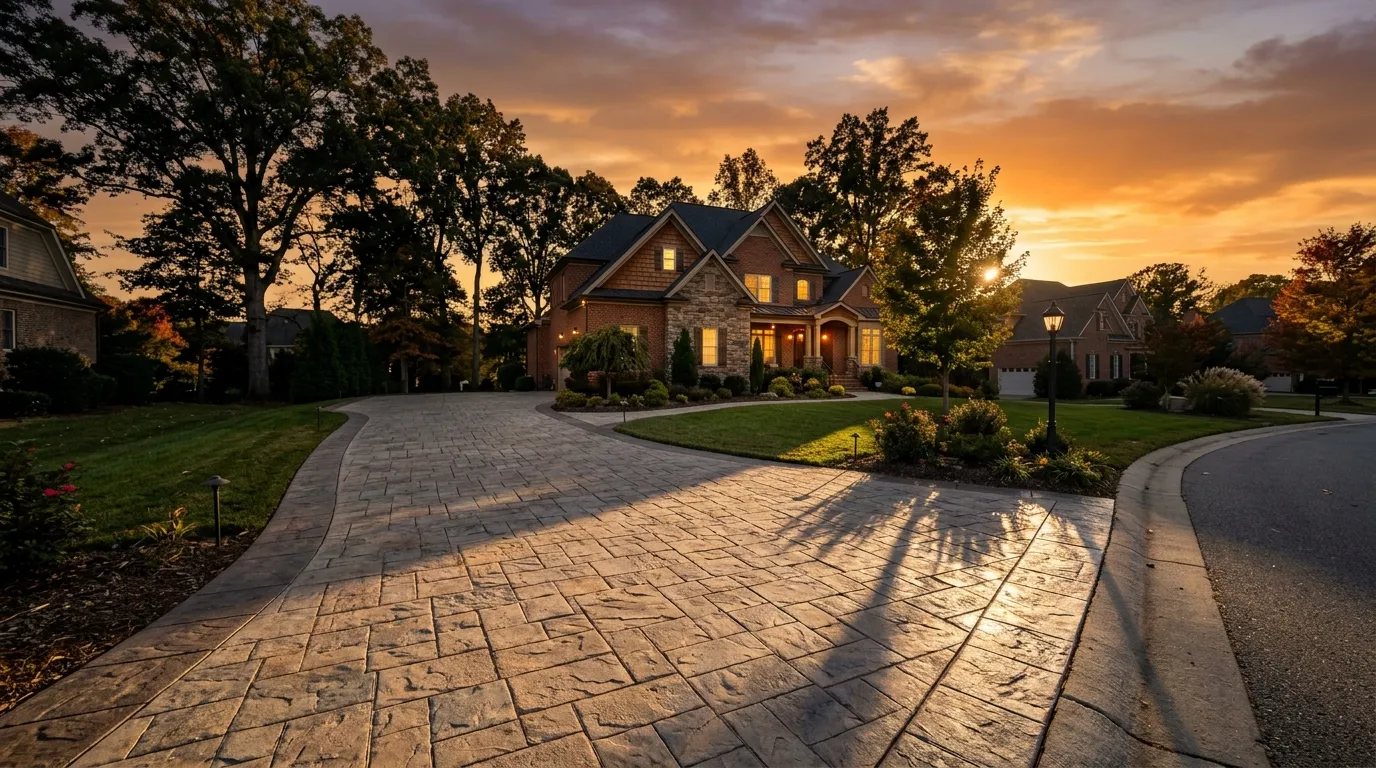
A stamped field or stamped borders to give the driveway a custom, high-end look while keeping the structural slab underneath built for vehicle loads.
Entryways & Porches
Stamped porch floors and front entry pads that make the first thing guests step onto look intentional and finished.
Stamped Concrete vs Pavers vs Natural Stone
Pavers and natural stone both have individual joints that, on shifting red clay, fill with weeds and heave out of level over time. Stamped concrete delivers the same custom look as one bonded surface with nothing to grow between, at a lower cost than natural stone. The tradeoff is that you reseal it every few years to keep the color rich.
| Stamped Concrete | Pavers | Natural Stone | |
|---|---|---|---|
| Lifespan | 25+ years | 20–30 years (joints heave) | 30+ years |
| Maintenance | Reseal every 2–3 years | Re-sand joints, pull weeds, re-level | Periodic sealing and re-set |
| Install Time | A few days plus cure | Longer, piece by piece | Longest, skilled labor |
| Cost | Mid | Mid to high | Highest |
Stamped Concrete Maintenance
Stamped concrete is one of the lower-maintenance decorative surfaces you can put in a Triangle backyard. There are no joints to re-sand and no weeds to pull. The main upkeep is keeping the sealer fresh.
Reseal Every 2–3 Years
The sealer is what protects the color and texture from UV, rain, and pool chemicals. Resealing every two to three years keeps the surface looking new and the color from fading or graying.
Routine Cleaning
Sweep and rinse regularly, and wash off spills and leaf stains before they set. A mild cleaner and a soft pressure wash handle most buildup without damaging the sealer.
Recoat as Needed
High-traffic spots and pool decks wear faster. A spot recoat or a fresh sealer coat brings the sheen and protection back without redoing the whole surface.
Why ALB Concrete Solutions for Stamped Concrete
Stamping is a timed, skilled job. The color, the release, and the stamp all have to go in during the short window when the concrete is workable, and there's no fixing it once it sets. A rushed or inexperienced crew leaves you with shallow patterns, blotchy color, or surface cracks you live with for decades.
Professional Team Oversight
Your project manager oversees the stamp work, timing of the pour, color, and release so the decorative finish stays aligned with the approved plan.
Coordinated ALB Team
The coordinated ALB team that preps the base stamps the surface, so the work stays coordinated through the only window that matters. No disconnected handoff during the stamping window.
Higher-Grade Mixes
We use a higher-grade concrete with the right admixtures and careful timing so the color sets true and the stamp holds its detail.
Serving the Whole Triangle
From Raleigh across Wake, Durham, Orange, Chatham, and Johnston counties, we match patterns and colors to local homes and bring sample boards to every estimate.
Stamped Concrete
Questions
It's still concrete, so we control where it can move with saw-cut control joints, reinforcement, a compacted base, and proper cure planning. Hairline movement at the joints is normal and planned. The random cracking people worry about comes from skipped base prep or rushed placement, which we avoid.
Stamped concrete usually lands in a similar mid-range to pavers up front, but it costs less to own over time because there are no joints to re-sand, no weeds to pull, and no pavers to re-level. Most stamped projects run around 10 to 20 dollars per square foot, varying with pattern and color complexity.
A properly installed and maintained stamped surface commonly lasts 25 years or more. Resealing every two to three years keeps the color and protection up. The structural slab underneath lasts as long as any quality driveway or patio we pour.
It can be smoother than broom-finished concrete, which is why we add an anti-slip additive to the sealer for pool decks and entryways. With that additive, a stamped surface grips well even around water.
In many cases yes, with a stamped overlay, a thin stampable layer bonded over sound existing concrete. The slab has to be in good shape with no major structural cracking. The ALB team looks at your current surface and tells you honestly whether an overlay will hold or whether you're better off with a fresh pour.
Low. Sweep and rinse it like any patio, wash off spills, and reseal every two to three years. That sealer schedule is the main thing standing between a stamped surface that stays rich and one that fades, so it's worth keeping up.
Get Your Free Stamped Concrete Quote
Tell us about your project and we'll text back the same day, often to set up a next-day visit with sample boards.
Related Concrete Services
Stamped finishes tie into the rest of the work we pour for Triangle homes.
Concrete Patios
Reinforced patios graded to drain, finished plain or stamped.
Learn moreWalkways & Sidewalks
Front walks and garden paths with even slope and a slip-resistant finish.
Learn moreConcrete Driveways
A reinforced structural slab built for vehicle loads, stamped or plain.
Learn moreStamped Concrete Across the Triangle
From Raleigh across Wake, Durham, Orange, Chatham, and Johnston counties, we match patterns and colors to local homes and bring sample boards to every estimate.
Give Your Backyard the Look of
Stone, Built to Last
Stamped concrete starts with a free on-site estimate where the ALB team brings real sample boards so you choose your pattern and color in your own daylight, then sends an itemized written proposal within about two business days.